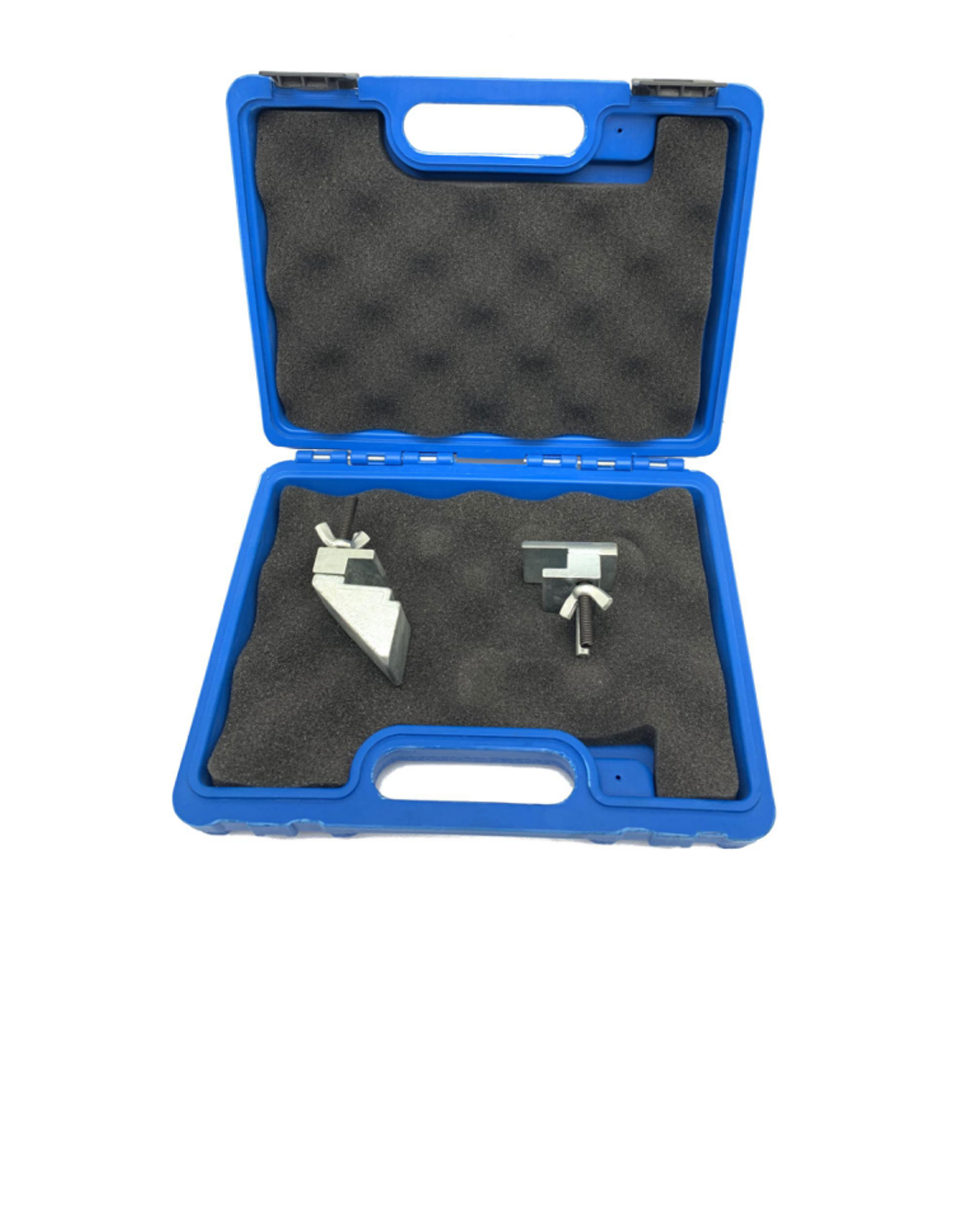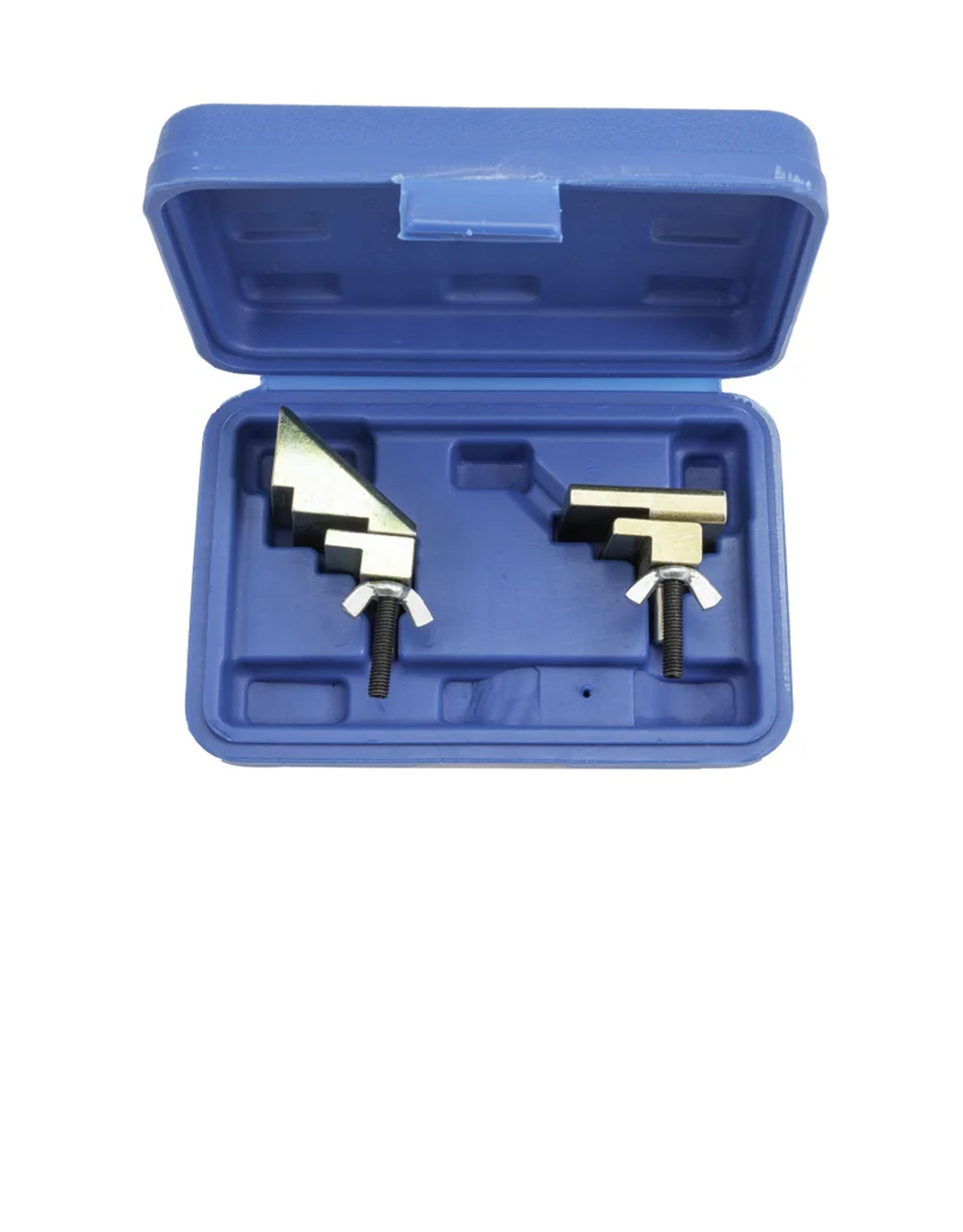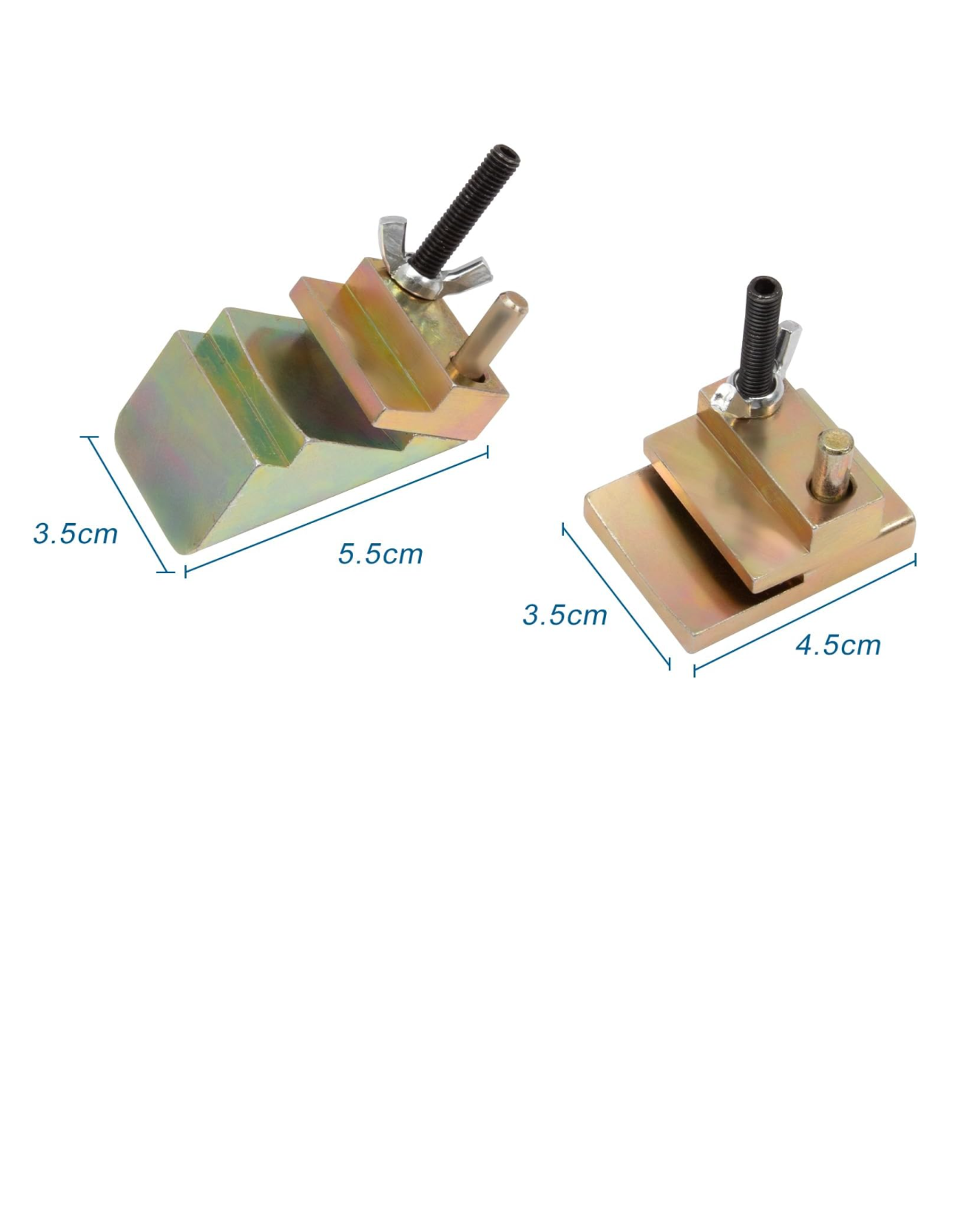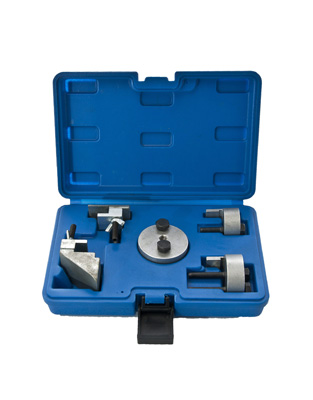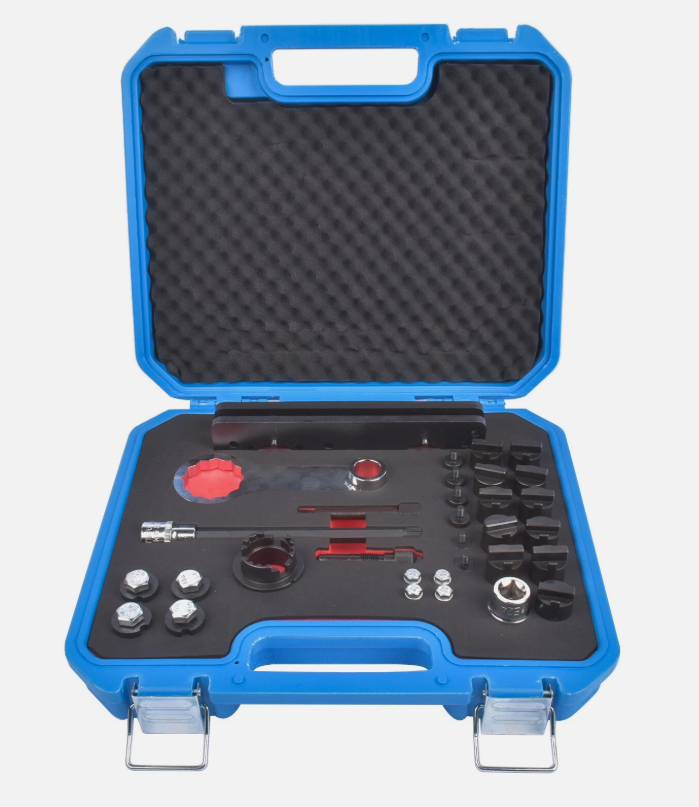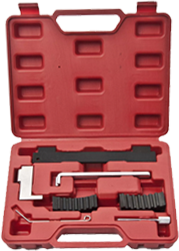
The BRIDER Stretch Drive Belt Removal and Installation Tool Kit provides a practical solution for replacing elasticated Poly-V belts on compatible auxiliary drive systems without a conventional tensioner. One tool supports controlled belt removal, while the other guides the replacement belt onto the pulley.
Designed for workshop and maintenance use, the kit helps reduce the risk of damaging the belt or pulley during installation and removal. Its adjustable fastening design allows the tool to be secured to a suitable pulley before the crankshaft is rotated according to the vehicle manufacturer’s service procedure.
Designed for installing and removing elasticated or stretch-fit Poly-V belts.
Suitable for compatible auxiliary drive systems without a conventional belt tensioner.
Includes separate tools for belt installation and removal.
Attaches to a suitable pulley to guide the belt during crankshaft rotation.
Helps minimize excessive stretching, twisting and accidental belt damage.
Adjustable fastening design supports secure positioning on compatible pulleys.
Suitable for professional workshops, automotive service centers and maintenance applications.
Compact construction makes the tools convenient to store and transport.
What is this stretch drive belt tool kit used for?
It is used to remove and install elasticated Poly-V auxiliary belts on compatible drive systems that do not use a conventional tensioner. The tools guide the belt off or onto the pulley while the crankshaft is carefully rotated.
Does the kit include both an installation tool and a removal tool?
Yes. The referenced configuration contains two working tools: one with a guiding profile for installing the belt and another designed to assist with removal.
Can it be used on every vehicle with a serpentine belt?
No. It is intended for compatible elasticated or stretch-fit belt systems. Conventional serpentine-belt systems with a spring-loaded tensioner normally require a different service procedure.
Can this tool be used for timing-belt replacement?
Its verified primary application is elasticated auxiliary Poly-V belt removal and installation. It should not be presented as a universal engine timing-belt tool unless the exact vehicle manufacturer’s procedure specifically approves its use.
How is the removal tool used?
The appropriate tool is securely attached to a suitable pulley at a position not already in contact with the belt. The crankshaft is then rotated in the specified direction so that the belt is progressively guided away from the pulley. The vehicle manufacturer’s instructions must always take priority.